02/11/2019

SOUTH AFRICA SPRINGBOKS


South Africa laid the groundwork with traditional Springbok rugby and finished an out-gunned England side off with two late tries to win the World Cup for the third time courtesy of a 32-12 victory on Saturday.


The Springboks became the first team to lose a pool match at a World Cup and go on to win it, having gone down to the All Blacks in their tournament opener at the same Yokohama International Stadium.
They join the New Zealanders with three World Cup triumphs and England remain the only team from the northern hemisphere to have won the title. 

CONGRATULATIONS, WELL DONE,

12/04/2019

WorldWatch Portugal

WorldWatch Portugal office has informed than the cartel in the petrol price fixing practiced in one of Europe’s oldest economies continues!!!
Prices for the motorist have increased for the last ten weeks on a regular basis.
To fil an average car petrol tank with 50 liters  the price has increased by 7 euros since the beginning of the year.
BP and Galp have the most expensive petrol consumer price in Portugal and one of the most expensive in the World, BP regular 95 Octane is fixed at 1,641 € per litre.
One of the most expensive in the world.
At the market price, consumers should be paying for regular 95 Octane 1,359 € per liter, this will place  Portugal in serious difficulties as this self-elected government  is now on an election driven campaign distribution tax payers money left and right.
WorldWatch foresees a decline in consumption of 23% with the biggest drop being the demand for petrol. The cartel in the petrol price fixing has the approval of the Government as each litre of petrol sold to the consumer is heavily taxed. With the economical measures taken by the Government and the attitude of energy companies there will be no room for economic growth in Portugal....
As WorldWatch indicated the growth and consumption in the second quarter will drop 23%.
In fairness to all readers the social and economic welfare of the Portuguese has been on the decline for the last 30 months ,
Strikes are abundant every day, in particular the public servants, this affects mainly Schools, hospitals in general all state controlled institutions.
In order for the government to continue with its election driven campaign distribution tax payers money left and right, the energy hike will continue, next week a 2 cents per liter petrol increase has already been announced.

This will no doubt create social unrest only equal to the French ”green jackets”, by then it will be too late for the self-elected government  to take action, the only option will be to resign.

09/12/2017

PORTAXLAND


Please note these details may be subject to change

THE NEWEST NATION IN EUROPE… PORTAXLAND

This European Nation has so many taxes that the name should be PORTAXLAND!!
In PORTAXLAND the tax payer pays tax on tax!!
Everting is taxed except for now the air we breathe!!

I will mention some of the Taxes that the populations are subject to, there is a huge amount of other Taxes that for now I will not mention, like the ones forced on consumers by the Banks.

The average citizen that is fortunate to have a job has to work an average of 8 months just to pay all the imposed Taxes!!

1-     Three different VAT rates apply; there is a general rate of 23%, followed by a reduced rate of 13% for ordinary wine, spring, mineral, medicinal and carbonated water, and tickets for cultural events. This is followed by a further reduced rate of 6% on cereals, meat, shellfish, fruit, vegetables, and other essential foods, books, newspapers, medicines, passenger transport and hotel accommodation.
2-      All employment income is subject to social security contributions. The employee's contribution is 11% of the salary, while the employer's contribution is 23.75% of the salary.
Portuguese income taxes apply to the following categories:
  • revenue from employment
  • business and professional income
  • investment income (including interest)
  • rental income
  • capital gains
  • pension income
3-     Taxes in PORTAXLAND are levied by both the federal and regional governments. The most important revenue sources include the income tax, Social security contributions, corporate tax and the value added tax, which are all applied on the federal level.
4-     IMI (Imposto Municipal sobre Imóveis – Municipal Property Tax) is a tax on the taxable value of immovable property in PORTAXLAND. This tax came into force in 2003, replacing the Council Tax, and reverts to the respective municipalities.

5-     PORTAXLAND tax for married couples

         Total taxable income is taxed at progressive rates varying from 14.5 percent on income
        under EUR 7,000 to 48 percent for income over EUR 80,000

6-     PORTAXLAND tax on investment income, Investment income (such as capital gains, interest and dividends etc.) is currently taxed at a rate of 28 percent. Likewise, rental income is also currently taxed at 28 percent

7-     PORTAXLAND tax on self-employment income 

8-     PORTAXLAND tax rate for ‘simplified regimes’, whereby 20 percent of income from sales of products or 80 percent of income arising from other business.

9-     Below are PORTAXLAND tax rates in 2017.

Income
PORTAXLAND tax rate
Deductible amount
Up to 7,035
14.5 percent
0
EUR 7,035–20,100
28.5 percent
EUR 984.90
EUR 20,100–40,200
37.0 percent
EUR 2,693.40
EUR 40,200–80,000
45.0 percent
EUR 5,909.40
EUR 80,000+
48 percent
EUR 8,309.4

10- Wealth tax in PORTAXLAND

It is an annual tax of 0.3 percent for Portuguese properties worth more than EUR 600,000; married/civil partners are granted a combined threshold of EUR 1.2mn.

11- If you have a car then you have double Taxation when purchasing the car, this is prohibited by the European Parliament but they too are useless.

12- Since 1988 there is in Portugal a tax called "Imposto Automóvel" (IA - Automobile Tax) that you indirectly have to pay when you buy a new car. The importer pays it to the government and includes it in the final price.

13- When you buy a new car you pay: car's base price + IA + 21% IVA/VAT.

14- In addition to various expenses associated with the detention of a vehicle, car owners must also pay the Circulation Single Tax (IUC)

15- Besides these Taxes there is also the Tax on Electricity, heating fuel, gasoline products (taxed 3 times).

16- ISP Tax – the levy on oil derivative products – of €0.06 per liter of both unleaded regular and diesel.

17- Gasoline prices are one of the most expensive in the world, the taxation is a massive 70% of the cost per liter.

18- The PORTAXLAND government will impose a new tax on some foods with a high salt content, such as potato chips and cookies, according to the draft Budgets State of 2018.

The measure will apply to cookies, pasta, chips and cereals containing at least 1 gram of salt per 100 grams of product and will mean an increase in the price of 0.8 cents per kilo.
19- The PORTAXLAND government has already introduced a sugar-sweetened tax in early 2017, which varies between 8 and 16 cents per liter, depending on the sugar level of the product, and the juice was exempt.
20- The draft Budget for 2018 also includes a new price increase for sugary drinks of up to 1,5%, depending on their sugar level.
21- Taxes on alcoholic beverages will also increase by 1.5% in the case of beer and 1.4% for spirits, liqueurs and sparkling wines.
22- Another example of the abuse is the amount of Taxes the consumer pays with the electricity bill…for every 100Kwh the consumer pays in Taxes 22.90 Euros!!
a)      Imposto Especial de Consumo de Eletricidade (IEC) Special consumer Tax of Electricity
b)      b)Taxa de Exploração Direção-Geral de Energia e Geologia (DGEG) Exploration Tax rate  of energy and geology.
c)    Contribuição para o Audiovisual (CAV) Contribution to the Audiovisual sector 2,85 € + VAT (6%)
d)    Taxa Municipal do Direito de Passagem (TMDP) Municipal Tax (right of passage)


PORTAXLAND has one of the most expensive electricity rates in the world!!!
This will be the third budget of the PORTAXLAND Socialist Government, which has a minority in Parliament and needs the support of the Marxist Left Bloc and the Portuguese Communist Party for any approval


I have not mentioned all Taxes that are now being imposed on the citizens; I have allowed you the reader to visit the site and see one of the oldest NATIONS IN EUROPE… PORTUGAL


27/09/2017

Oil shale crude

In the middle of all this market crises..some "Did you know"..

Oil shale crude is actually composed of kerogen. It is a waxy organic substance that was formed from algae, plants, vegetation, and all forms of animal life. Through millions of years, covered in layers of sediment, and subjected to very high pressures a transformation occurred resulting into a form of non-conventional crude oil embedded in layers of sediment. When subjected to very high temperatures it converts into various liquid and gas hydrocarbons. Kerogen can be refined like regular high quality light crude oil.

03/06/2017

OPEC

As oil prices continue falling despite OPEC’s renewed efforts to shore up world crude markets, Wall Street banks have more bad news for the producer group: the outlook for next year isn’t great either.
Oil futures have lost 8 percent since the Organization of Petroleum Exporting Countries and its allies agreed on May 25 to keep output constrained through the first quarter of 2018 in a bid to clear a global glut. While Goldman Sachs Group Inc. expects their strategy to ultimately succeed, they warn the surplus may re-appear once the curbs end. Morgan Stanley and JPMorgan Chase & Co. say the group will have little choice but to drop the reduced production.
Resurgent supplies from U.S. shale drillers and fading growth in fuel demand mean that world oil markets will face another overhang next year, the banks predict. That means Saudi Arabia and Russia, the two biggest producers in the 24-nation coalition, will have to control crude prices around $42 a barrel.With U.S. production growing strongly, there doesn’t seem to be much room for OPEC to cut production in 2018.
The surplus will continue as U.S. shale drillers boost production with surprising speed. American oil explorers, having learned to operate more efficiently during a two-year market slump, have restored almost all the output lost during the downturn. As a result, the market may be unable to absorb the return of production halted by OPEC and its partners when their pact ends in April.Still, even if a surplus re-emerges in 2018, OPEC’s current efforts to deplete stockpiles will make their task of managing it easier, according to Citigroup Inc.
Those increases in inventories may nonetheless prove substantial enough to prevent prices gaining, said David Martin, an analyst at JPMorgan, who slashed his 2018 forecast for Brent crude by $10 a barrel to $42 on May 25. Brent traded near $49 a barrel on the ICE Futures Europe exchange in London on Friday.

OPEC is shackled to its deal for a long time.

04/01/2017

The crude scheme


Crude producers agreed they’re cutting oil production!!!

This is speculation, most crude producers cannot afford to reduce production, we have the example of Venezuela!!

This measure is a way to inflate crude prices, however the cause/effect will be seen in the next months as other alternative means of energy are now in an advanced stage of development, let’s not forget that US elect President Trump stated that one of the Nations priorities is energy that includes shale oil.
 
Futures rose as much as 2.8 percent after adding 45 percent last year, the biggest annual gain since 2009. Officials from Oman and Kuwait told local media they’re cutting oil production in January, fulfilling pledges that they and 22 other producers made on Dec. 10.
Oil climbed for the first time in three years in 2016 as the Organization of Petroleum Exporting Countries and 11 other nations agreed to cut output starting Jan. 1 in an effort to reduce bloated global inventories. Prices, which eased in late December, are surpassing the peaks reached just after the deal was finalized, as Kuwait and Oman give the first signs the curbs are being implemented.

OPEC member Kuwait has reduced output by 130,000 barrels a day to about 2.75 million a day, Al-Anba newspaper reported, citing Kuwait Oil Co. Chief Executive Officer Jamal Jaafer. Oman is cutting 45,000 barrels a day from 1.01 million, the Oil Ministry’s Director of Marketing Ali Al-Riyami said on Oman TV.

OPEC nations and non-members including Russia and Mexico have agreed to trim output by about 1.8 million barrels a day. Iraq will start implementing cuts by reducing heavy and medium grades, the nation’s Oil Minister Jabbar al-Luaibi told Kuwaiti daily al-Jarida.
A big factor to watch over the coming months will be the response of shale oil to the supply cuts. That policy crushed crude prices and resulted in the shakeout of high-cost producers. For one, the U.S. shale industry sees a strong come back, now analysts expect after Trump takes office the US will continue with more shale production, the U.S. is producing about 700,000 barrels a day less than it was a year ago.
Drillers in the U.S. increased the rig count by two to 525 last week, the highest level since last January, according to data from WorldWatch.
Saudi Arabia has lost market control to Iran, if this strategy continues other Opec and non.Opec members will lose economic independence and face serious economic times.

16/11/2016

OPEC´S BIGGEST CATASTROPHE


The catastrophe looming for OPEC is the deal to cut production..


OPEC and Russia will meet in Doha on Thursday for another round of talks without ministers from Iran and Iraq, the two countries that pose the biggest obstacle to a deal to cut production.

Members of the Organization of Petroleum Exporting Countries want to reach an agreement by the group’s Nov. 30 meeting in Vienna, Secretary-General Mohammed Barkindo said in an interview in Marrakech, Morocco on Tuesday. Saudi Arabia, Iraq and Iran remain at odds over how to share output cuts, said an OPEC delegate, who asked not to be identified because the information isn’t public.
 
According to World Watch managing director if the agreement goes ahead then Saudi Arabia will lose market share to Iran and possibly also to Iraq, there will be a shift in regional influence in favor of Iran…

The latest round of diplomacy reflects OPEC’s struggle to finalize the deal reached in Algiers on Sept. 28, which would end a two-year policy of pumping without limits. More than 18 hours of talks last month in Vienna failed to overcome internal disagreements, which in turn prevented a wider pact with non-OPEC producers. Without an accord, the International Energy Agency predicted a fourth consecutive year of oversupply in 2017.

Russia will hold informal consultations with representatives of some OPEC countries at the Gas Exporting Countries Forum in Doha on Nov. 17-18, the Energy Ministry in Moscow said in a statement Tuesday. Khalid Al-Falih, the minister of energy and industry for Saudi Arabia, which is not a member of the gas group, will join the talks, said an OPEC delegate who asked not to be identified because the information isn’t public.

 Neither Iran nor Iraq will send oil ministers to Doha. Hamed Al-Zobaie, Iraq’s deputy minister for natural gas affairs, will represent the country, Oil Ministry Spokesman Asim Jihad said by phone. Iran’s OPEC Governor Hossein Kazempour Ardebili and National Representative Behrooz Baikalizadeh will attend the meeting, said an Oil Ministry official.

Iraq has sought an exemption from joining any production cuts, arguing that its fight against Islamic State justifies special treatment. Iran has insisted it won’t accept any limits on its production until it has returned to the pre-sanctions level of about 4 million barrels a day.

 The talks in the Qatari capital run alongside behind-the-scenes diplomacy, including an unannounced meeting in recent days in London between Barkindo and Al-Falih. After traveling to Venezuela to meet with President Nicolas Maduro, OPEC’s top official will also visit Ecuador and Iran, two people familiar with the matter said Tuesday.

Saudi Requirements

OPEC pledged in Algiers to bring its production down to a range of 32.5 million to 33 million barrels a day, which compares with the group’s own output estimate of 33.6 million last month. The group is also seeking cooperation from Russia and other producers outside the group, although so far none have committed to curbing output.

Saudi Arabia, OPEC’s de-facto leader, is ready to cut production, but only if the effort is built around four pillars, said one delegate. All members must agree to collective action, pledge to share the burden of cuts equitably, and do so in a way that is transparent and has credibility with the market. The latter can be achieved by using OPEC estimates of how much each member pumps, rather than relying on the countries’ own figures, the delegate said.
In practice, that means Saudi Arabia still thinks Iraq needs to cut output and Iran has to freeze production around current levels, Neither country has so far agreed to do that. For both countries this will imply a revenue loss that will cause a severe blow to both economies.

Three countries -- Libya, Nigeria and Iran -- have been granted “special considerations” to implement the Algiers accord,. Iraq is not among these members, he said.

In Libya and Nigeria, production is still recovering after a spate of violence and militant attacks targeted oil infrastructure. Iran has insisted it won’t accept any limits on its production until it has returned to the pre-sanctions level of about 4 million barrels a day.

Iran should not accept present cuts as the sanctions might return, the reason…Trump is the elected US President and has stated that the agreements with Iran will be Re-viewed as soon as he takes office.

Saudi Arabia, Iraq and Iran are the largest producers within OPEC, accounting for about 55 percent of the group’s output, according to data compiled by WorldWatch.

13/03/2016

“Economical Madness”

The European economy continues to face adverse economic ,however  there is a European nation were these adverse economic conditions are immediately passed to the public in this case motorist .
Portugal continues to have one of the world’s most expensive final consumer prices for fuel (petrol) per liter, the prices are largely inflated by the now parliament elected government, in the last weeks gasoline price have increased by over 14 cents per liter…

The common citizen in Portugal faces once more a huge  increase in taxes as part of the 2016 State budget  presented to the European parliament, these measures imply increase in taxes to the stamp duty, tax on oil products and tobacco tax.    
The political action taken by the new parliament elected government will downgrade the Portuguese economy to new levels of “economical madness”
The public servants will see the working hours reduced to 35h a week!!! While the public sector will continue 40h a week.. Four Public holidays removed during the Troika control have now been reinstated, according to local news tax fraud and evasion by big economical groups will continue.


Discretionary measures in public administrations, the Executive expects an  impact of 0.21% of GDP at the level of indirect taxes, which is about 155 million more that will breach the Treasury in 2016., this shows in fact that no real measures have been taken to reduce the burden the state has on the economy.

NO FREEZE DEAL


Oil prices have not passed their lowest point as shrinking supplies outside OPEC and disruptions inside the group will not the erode global surplus, the International Energy Agency said.

Production outside the Organization of Petroleum Exporting Countries will increase by 450,000 barrels a day this year, or 70,000 barrels a day more than estimated last month, the agency said. Markets are also being supported by output losses in Iraq and Nigeria, and as Iran restores production to a faster pace than planned following the end of international sanctions.

09/01/2016

THE JACKPOT

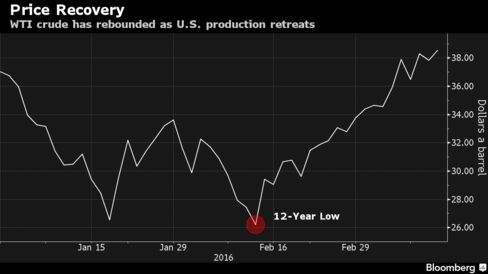
Crude prices are at a 12 year low, however the consumer price for gasoline for the Portuguese motorist will once  more be inflated next week by another cent per liter. (95 Octane)
WorldWatch chief analyst sees no reason for this latest increase as the Brent crude prices are at minimum 12 year low, the Petrol companies that operate in Portugal continue to have a concentrated increase policy supported by the government as energy prices are heavily taxed, even now with the new parliament elected Socialist/left block and Communist party the situation continues as motorist face constant increases making Portugal have one of the most expensive gasoline prices in Europe.
Brent prices have devalued more than 10%!!!
The average price for Regular 95 Octane is 1,362 euros per liter... The average price for Diesel is 1,088 euros per liter!!!
However if you travel on the more than 3000km of highway that exist in Portugal the consumer price is even higher, 12 cents per liter more expensive , all companies Galp, BP, Repsol and Cepsa practice the same inflated prices.
With these prices consumption will continue to decrease further in 2016!

14/11/2015


Oil stockpiles have swollen to a record of almost 3 billion barrels because of strong production in OPEC and elsewhere, potentially deepening the rout in prices, according to the International Energy Agency.
This “massive cushion has inflated” on record supplies from Iraq, Russia and Saudi Arabia, even as world fuel demand grows at the fastest pace in five years, the agency said. Still, the IEA predicts that supplies outside the Organization of Petroleum Exporting Countries will decline next year by the most since 1992 as low crude prices take their toll on the U.S. shale oil industry.


“Brimming crude oil stocks” offer “an unprecedented buffer against geopolitical shocks or unexpected supply disruptions,” the Paris-based agency said in its monthly market report. With supplies of winter fuels also plentiful, “oil-market bears may choose not to hibernate.”

Crude has dropped about 40 percent in the past year as OPEC defends its market share against rivals such as the U.S. shale industry, which is faltering only gradually despite the price collapse. Oil inventories are growing because supply growth still outpaces demand, the 12-member exporters group said in its monthly report Thursday.
Total oil inventories in developed nations increased by 13.8 million barrels to about 3 billion in September, a month when they typically decline, according to the agency. The pace of gains slowed to 1.6 million barrels a day in the third quarter, from 2.3 million a day in the second, although growth remained “significantly above the historical average.” There are signs the some fuel-storage depots in the eastern hemisphere have been filled to capacity, it said.

Heating Fuel

“The stock buffer is bearish and will probably set a lid on how much higher prices can go in 2016,” Torbjoern Kjus, an analyst at DNB ASA in Oslo, said by phone. “There’s a sizeable risk that we could run totally full,” in terms of storage capacity, he said.

Stockpiles of diesel, used as heating fuel in Europe in the U.S. northeast, were at a five-year high of about 600 million barrels at the end of August. “This could protect the market from a supply crunch should there be a lengthy spell of cold temperatures,” the IEA said.

Production outside OPEC will fall by 600,000 barrels a day next year, with an equal-sized decline in U.S. shale oil, the IEA said. That contrasts with an expansion of 2.4 million a day in 2014 in total non-OPEC output. The IEA’s 2016 forecast for non-OPEC supply, at 57.7 million barrels a day, is 100,000 barrels lower than in last month’s report.

Demand Growth

Overall, the report shows a stronger outlook for oil markets next year because of the cut to non-OPEC supply and increase in the demand forecast, according to DNB, RBC Capital Markets and Sanford C. Bernstein & Co.
“While 2015 remains oversupplied, the picture for 2016 and beyond is becoming very favorable,” analysts at Bernstein including Oswald Clint said in a report.
Faltering non-OPEC supply next year means that the amount of crude needed from OPEC is moving closer to the group’s actual output. About 31.3 million barrels a day will be required from the organization in 2016, 460,000 less than it pumped in October.

Global Demand

Supply from OPEC was little changed last month at 31.76 million barrels a day as declines in Iraq and Kuwait countered gains in Libya, Saudi Arabia and Nigeria, according to the report. Near-record output from the group’s Gulf members means the organization’s spare capacity is “stretched thin,” the IEA said. OPEC ministers will meet on Dec. 4 in Vienna to review their current policy.
Global oil demand will climb by 1.8 million barrels a day this year to 94.6 million amid the strongest growth in India’s consumption in more than a decade, according to the agency. Demand growth will ease next year to 1.2 million barrels a day as the stimulus from cheap fuel fades and China’s economy remains “problematic.”

23/09/2015

Brent Crude Hits February 2015 Levels

Brent and WTI crude oil
October Brent crude oil futures rose by $0.26 and closed at $46.63 yesterday. The US WTI and Brent differential fell to $2.04 per barrel on September 15, 2015. It’s the narrowest spread between WTI and Brent since February 2015.

US crude oil prices rose marginally due to the consensus of slowing US production and speculation of falling US crude oil stocks. In contrast, the speculation of rising supplies from Iran and the Middle East continue to drag Brent crude oil lower. However, the global crude oil market will be oversupplied in 2016. As a result, it will continue to put downward pressure on crude oil prices.

WorldWatch forecast for Brent and WTI
The WorldWatch released its monthly STEO (Short-Term Energy Outlook) report on September 9, 2015. The  agency estimated that US crude oil prices could average around $49 per barrel in 2015 and $54 per barrel in 2016. Likewise, it estimated that Brent crude oil prices could average around $50 per barrel in 2015 and $52 per barrel in 2016. This forecast suggests a spread of $5 per barrel.
The rise in the crude oil spreads benefits US crude oil refining companies like Marathon Petroleum (MPC), Tesoro (TSO), and Valero Energy (VLO) because they pay less than the global benchmark crude oil price. These stocks account for 7.12% of ETFs like the Select Sector SPDR Fund ETF (XLE). In contrast, a narrow spread benefits US crude oil producers. The roller coaster ride of crude oil prices also impacts oil and gas ETFs like XLE and the SPDR S&P Oil & Gas Exploration & Production ETF (XOP).

Oil benchmarks
Brent crude oil is the global benchmark for crude oil. It represents the receiving price of international crude oil producers. In contrast, WTI is the US benchmark for crude oil. WTI crude oil is priced at Cushing, Oklahoma—the futures contract delivery point for NYMEX crude oil. WTI is the receiving price for oil producers in the US

14/04/2015

LOW COST GASOLINE..THE JOKE

Super95 is the most common type of fuel in Europe and is found on each gasoline station.
Portugal the price for gasoline are 14-19% more expensive  than the European average.
Portugal has now the fourth most expensive consumer price for Fuel in Europe 24% over the average price, and is one of the most expensive in the world.
This year alone the final consumer price at the pump for the motorist have increased over 20 cents per liter, in one of Europe’s poorest Nations this inflation of prices has a devastating effect on many families.
During the crude price drop over the last weeks the petrol companies in Portugal reflected to the consumer very little of that price drop which reached prices of 2009, in fact they keeped the increase on a weekly basis.
Companies like Galp,BP,Repsol and Cepsa, simply continue on an inflated  price range with the agreement of the government, in fact this is an election year but the Portuguese public continue to hear as they have done in the past four years how more and more taxes are created, in fact this is the only measures the politicians have to stimulate employment and growth, create more phantom taxes.
 
The Portuguese are the only Nation that pays Tax on Tax, the average worker has to work 8 months per year just to pay the Taxes.
There is no reason to have increased the consumer price for Fue (gasoline)l except the reason to exploit the public.
The announced growth will now be condemned to failure, all politicians and political parties have the same basic worthless ideas that will further degrade the badly structured economy. The present government or future governments should work for the people, the ones that elect them and not work and support companies who’s objective is profit at any expense.
 
Now the present Government has decided that all gasoline stations must have a low cost pump, one for diesel the other for un-leaded fuel, these so called low cost gasoline should have a minimum 15 cents difference to the normal additive product, however and according to today’s news, Cepsa is the first gasoline company To announce that it will only sell low costs products, the amazing news revealed is that the consumer costs per liter will be 3 cents difference !!!
 
In fact the low cost gasoline is just another way for the gasoline companies to increase their profit as they will be selling inferior product at almost the same inflated price as the normal product, what other reason would Cepsa have to change to low cost products if not an increase in profit.
 
These companies with the support of the government do as they please, the only objective they have is PROFIT at any cost ...
BP has the most expensive final consumer prices for the motorists; in the highways these companies have the prices even more inflated by another 3 cents per liter.
 

SOUTH AFRICA SPRINGBOKS

South Africa laid the groundwork with traditional Springbok rugby and finished an out-gunned England side off with two late tries to win ...